
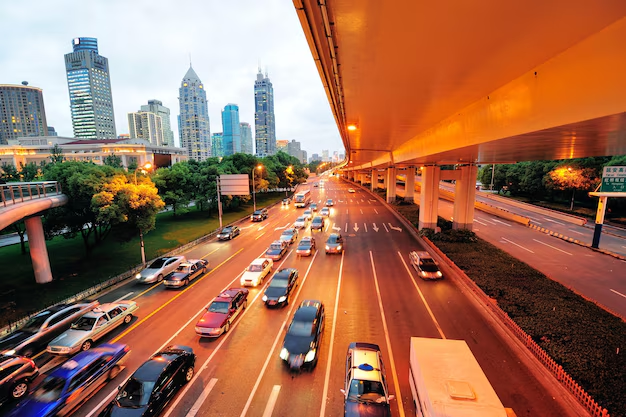
Rush Hour in Atlanta: Best and Worst Times to Drive
Atlanta is known for its vibrant neighborhoods, world‑class airport…and some of the heaviest traffic in the Southeast. If you live here, commute into the city, or are visiting for a few days, knowing when rush hour hits in Atlanta can save you a lot of time and frustration.
This guide breaks down typical rush hour times, how traffic changes by area and direction, and smart ways to plan around it.
Typical Rush Hour Times in Atlanta
While traffic can vary day to day, Atlanta rush hour generally follows a consistent pattern on weekdays.
Weekday Rush Hour at a Glance
| Period | Typical Time Window | What to Expect |
|---|---|---|
| Morning | 6:30 a.m. – 9:30 a.m. | Heavy inbound traffic toward Downtown/Midtown |
| Midday | 11:00 a.m. – 2:00 p.m. | Moderate traffic, busy near major shopping areas |
| Evening | 3:30 p.m. – 7:00 p.m. | Heavy outbound traffic leaving the city |
Most congested windows:
- Morning: about 7:30 a.m. – 9:00 a.m.
- Evening: about 4:30 p.m. – 6:30 p.m.
If you can avoid driving during those peak 90 minutes, you’ll usually have a much easier trip.
How Rush Hour Works by Direction
Atlanta’s traffic is heavily shaped by people commuting in and out of the city core.
Morning Rush (Inbound Traffic)
Morning rush hour is strongest for traffic heading into:
- Downtown Atlanta
- Midtown
- Buckhead
- Areas around Georgia Tech, Georgia State University, and major office towers
Expect the slowest conditions on:
- I‑75, I‑85, and the Downtown Connector (I‑75/85) heading south into Downtown and Midtown
- GA‑400 southbound heading toward Buckhead and I‑85
- I‑20 heading eastbound into Downtown from the west and westbound into Downtown from the east
- I‑285 where it meets I‑75, I‑85, GA‑400, and I‑20, especially on the top end (north side)
Evening Rush (Outbound Traffic)
Evening rush hour is usually the reverse of the morning:
- Heavy traffic leaving Downtown, Midtown, Buckhead, and surrounding job centers
- Slow conditions on:
- I‑75 and I‑85 northbound and southbound out of Downtown
- GA‑400 northbound leaving Buckhead and the I‑285 area
- I‑20 eastbound (toward Decatur, Stonecrest) and westbound (toward Douglasville)
- Major spokes from the city like Peachtree Street, Ponce de Leon Avenue, Memorial Drive, and Moreland Avenue
If you’re heading into the city in the evening or out of the city in the morning, you’ll usually hit lighter traffic than the main commuting direction.
Rush Hour by Day of the Week
Traffic habits in Atlanta shift slightly across the week:
Monday:
Often busy, but sometimes a bit lighter in the early morning as some people work from home or have flexible starts.Tuesday–Thursday:
These are often the heaviest rush hour days, especially from:- 7:30 a.m. – 9:00 a.m.
- 4:30 p.m. – 6:30 p.m.
Friday:
- Morning rush can be slightly lighter.
- Afternoon rush can start earlier, especially from 2:30 p.m. on, as people leave work early or head out of town.
- Traffic toward I‑75/I‑575 north, I‑85 northeast, and I‑20 east/west can be heavier as people start weekend trips.
Weekend and Special Event Traffic
There’s no traditional “rush hour” on weekends, but you can still hit serious delays.
Typical Weekend Patterns
Saturday late morning to mid‑afternoon (around 11:00 a.m. – 3:00 p.m.)
Busy near:- Shopping centers (Lenox Square, Phipps Plaza, Atlantic Station, Cumberland, Perimeter)
- Tourist attractions (Georgia Aquarium, World of Coca‑Cola, Zoo Atlanta, Atlanta BeltLine segments)
Saturday night (6:00 p.m. – 10:00 p.m.)
Extra slow around:- Downtown (State Farm Arena, Mercedes‑Benz Stadium, Georgia World Congress Center)
- Midtown (restaurants, nightlife, events)
- Buckhead (Lenox/Phipps, Peachtree Road)
Sunday afternoons (3:00 p.m. – 7:00 p.m.)
Return traffic into the city and around the airport can be heavy, especially during holiday weekends.
Event‑Driven Traffic
Atlanta traffic can spike well outside normal rush hours when there are:
- Sports events and concerts at:
- Mercedes‑Benz Stadium
- State Farm Arena
- Truist Park (Cumberland area, near I‑75/I‑285)
- Conventions at the Georgia World Congress Center
- College events near Georgia Tech, Georgia State, Emory, and Georgia State Stadium area
During major events, expect heavy congestion:
- 2–3 hours before and 1–2 hours after the event
- On nearby interstates and surface streets leading to the venue
The Worst Corridors During Atlanta Rush Hour
While almost any major road can slow down, certain key corridors are known for being especially congested:
Interstates
Downtown Connector (I‑75/85)
- Runs through the heart of Downtown and Midtown
- Very heavy both directions during morning and evening rush
- Often slows down even outside peak times
GA‑400 (especially south of I‑285)
- Key route from North Fulton and Forsyth into Buckhead and Midtown
- Heavy southbound in the morning, northbound in the evening
I‑285 (The Perimeter)
- Particularly congested on the top end (north side) near:
- I‑75 (Cumberland)
- GA‑400 (Sandy Springs)
- I‑85 (Doraville)
- East and west sides can also be slow where I‑20 intersects
- Particularly congested on the top end (north side) near:
I‑20
- Busy heading inbound during morning and outbound during evening
- Crash‑related delays can back up quickly
Major Surface Streets
Commonly slow during commute times:
- Peachtree Street/Peachtree Road (Downtown through Midtown, Buckhead, and Brookhaven)
- Ponce de Leon Avenue (US‑78) through Midtown, Old Fourth Ward, and Decatur
- Moreland Avenue and Memorial Drive
- Cobb Parkway (US‑41) around Cumberland and Truist Park
- Roswell Road in Buckhead and Sandy Springs
- Buford Highway (US‑23) through Brookhaven and Chamblee
Best Times to Drive in Atlanta
If you have flexibility, you can usually avoid the worst of Atlanta rush hour by choosing off‑peak times:
- Mid‑morning: 9:30 a.m. – 11:00 a.m.
- Early afternoon: 1:30 p.m. – 3:00 p.m.
- Later evening: After 7:00 p.m. on most weekdays
On weekends, try to:
- Run major errands before 11:00 a.m. or after 3:00 p.m.
- Leave extra time near event centers and shopping districts
Tips for Dealing With Atlanta Rush Hour 🚗
1. Use Real‑Time Traffic Tools
Before you head out, check:
- Navigation apps with live traffic and incident reports
- Local radio traffic updates (common during rush hours)
- Digital message boards on interstates maintained by the Georgia Department of Transportation (GDOT)
GDOT Contact (for travel info and road conditions):
Georgia Department of Transportation
600 West Peachtree St NW
Atlanta, GA 30308
Main phone: 404‑631‑1000
They also operate cameras and signs along interstates to show current conditions.
2. Consider MARTA and Other Transit Options
Public transit can help you bypass some of the worst traffic, especially for commuting to Downtown, Midtown, and Buckhead.
MARTA Rail & Bus
Metropolitan Atlanta Rapid Transit Authority
2424 Piedmont Rd NE
Atlanta, GA 30324
Customer information: 404‑848‑5000
Many Atlantans park at MARTA stations (like North Springs, Doraville, College Park, East Point, Lindbergh Center) and ride trains into the city during peak times.
3. Shift Your Schedule When Possible
If your workplace or plans allow:
- Arrive before 7:00 a.m. and leave before 3:30 p.m., or
- Start later, arriving around 10:00 a.m. and leaving after 7:00 p.m.
Even a 30–45 minute shift can make a noticeable difference in drive time.
4. Plan Alternate Routes
In many intown neighborhoods (like Virginia‑Highland, Inman Park, Grant Park, West Midtown), surface streets can be more predictable than jumping on the interstate for a short trip. However:
- Neighborhood streets also back up during rush hour.
- Watch for school zones, pedestrian traffic, and lower speed limits.
Use alternates only where it’s safe, legal, and not disruptive to residential areas.
5. Build in Extra Time for the Airport
Hartsfield‑Jackson Atlanta International Airport is one of the busiest airports in the world, and traffic around it can be intense during:
- Weekday mornings: 6:30 a.m. – 9:00 a.m.
- Evenings: 3:30 p.m. – 7:00 p.m.
- Sunday afternoons and evenings
If you’re driving to the airport during rush hour, it’s wise to:
- Add at least 30–45 extra minutes beyond what your GPS shows
- Account for parking or rental car returns, plus TSA lines
How Seasons, Weather, and Schools Affect Atlanta Traffic
School Year vs. Summer
Traffic tends to be:
- Heavier during the school year, especially:
- Around 7:00 a.m. – 8:30 a.m. near schools
- In the mid‑afternoon when schools dismiss
- Somewhat lighter in summer, especially in the early morning
When Atlanta Public Schools and major suburban districts (Fulton, DeKalb, Cobb, Gwinnett, Clayton) are on break, you may notice slightly shorter commute times.
Weather Conditions
Atlanta traffic is very sensitive to:
- Rain: Even light to moderate rain can cause slower speeds and more collisions.
- Storms or severe weather: Strong thunderstorms often lead to sudden backups.
- Rare winter weather (ice/snow): Even minor ice can bring traffic to a near standstill.
On bad weather days, rush hour can:
- Start earlier
- Last longer
- Be more unpredictable, especially on bridges, overpasses, and hilly areas
Quick Reference: When Is Rush Hour in Atlanta?
Weekdays (Monday–Friday):
- Morning rush hour:
About 6:30 a.m. – 9:30 a.m. (worst around 7:30–9:00 a.m.) - Evening rush hour:
About 3:30 p.m. – 7:00 p.m. (worst around 4:30–6:30 p.m.)
Weekends:
- No classic rush hour, but heavy pockets:
- Midday and afternoon near shopping and attractions
- Before and after major events
- Sunday late afternoon and evening heading back into the city and to the airport
If you’re planning to drive in or around Atlanta, using these time windows and tips will help you avoid the worst congestion and navigate the city more smoothly.