Who Burned Atlanta? A Clear Look at the City’s Most Famous Fire
When people ask “Who burned Atlanta?”, they’re usually talking about the burning of Atlanta during the Civil War in 1864. If you live in Atlanta today, walk through Downtown, or visit places like Oakland Cemetery or the Atlanta History Center, you’re never far from this turning point in the city’s story.
This guide explains who burned Atlanta, why it happened, what actually burned, and how you can still see traces and interpretations of that history around modern Atlanta, Georgia.
The Short Answer: Who Actually Burned Atlanta?
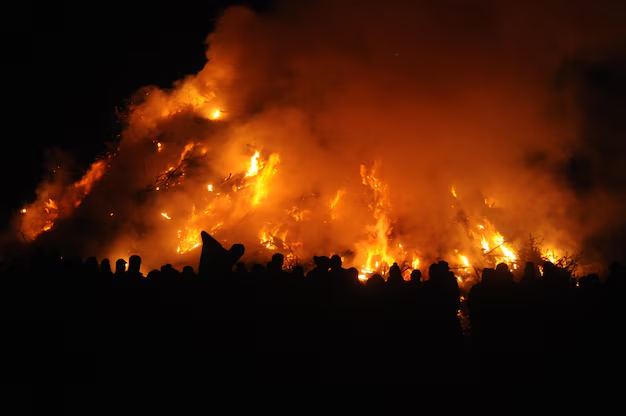
In November 1864, during the American Civil War, Union troops under Major General William Tecumseh Sherman were primarily responsible for burning large parts of Atlanta.
However, the full answer is more nuanced:
- Union forces destroyed:
- Military targets
- Railroad lines
- Warehouses and factories
- Fires spread and damaged nearby civilian areas.
- Confederate forces had already destroyed some supplies and infrastructure as they retreated in early September 1864, to keep them from Union hands.
So when someone says “Sherman burned Atlanta”, they’re referring to Union troops carrying out intentional destruction of military resources, plus fires that spread beyond what was strictly planned.
Why Was Atlanta Burned in the First Place?
In 1864, Atlanta was a critical Confederate transportation and supply hub:
- Major railroads met in Atlanta, connecting the Deep South.
- Factories and warehouses supported the Confederate war effort.
- The city stored weapons, ammunition, and military supplies.
From a military standpoint, Union commanders believed that:
- Capturing Atlanta would weaken the Confederacy.
- Destroying its military value would make it harder for the Confederacy to continue fighting.
After Union forces took the city in September 1864, Sherman decided to:
- Evacuate civilians, as much as possible.
- Destroy Confederate military assets in and around the city.
- Move his army on his infamous “March to the Sea” from Atlanta to Savannah.
As part of this plan, Atlanta’s military infrastructure was deliberately burned in November 1864.
What Exactly Burned in Atlanta?
Atlanta was not completely erased, but it was severely damaged.
Targets of Union Destruction
Union forces focused heavily on military and industrial targets, including:
- Railroad depots
- Railroad tracks and bridges
- Foundries and munitions works
- Warehouses stocked with military supplies
- Factories producing war goods
These were considered legitimate military targets by Union commanders at the time.
Collateral Damage and Civilian Areas
Once fires started, they did not stay neatly contained:
- Flames spread from industrial and rail areas into nearby neighborhoods.
- Some homes and businesses were destroyed.
- Residents later described seeing large parts of the city lit up in flames, especially around what is now Downtown and the railroad corridors.
While the intent was to cripple Confederate logistics, the reality included significant damage to civilian property.
Who Gave the Orders?
To understand “who burned Atlanta,” it helps to break it down:
| Role | Person / Group | Connection to Burning of Atlanta |
|---|---|---|
| Top Union commander in the area | Major General William T. Sherman | Ordered the destruction of Confederate military assets and infrastructure in Atlanta. |
| Union corps and division commanders | Various Union generals under Sherman | Directed specific units to destroy railroads, depots, factories, and supplies. |
| Union soldiers | Troops assigned to torch or dismantle targets | Physically carried out burning and demolition. |
| Confederate leadership | Commanders retreating from Atlanta | Ordered destruction of some military supplies and infrastructure before abandoning the city (earlier in September). |
In everyday conversation, Sherman gets the credit or the blame, but in practice:
- Union military leadership collectively planned and oversaw the destruction.
- Individual soldiers lit many of the actual fires.
- Retreating Confederates contributed to earlier fires and damage.
Did Sherman Burn the Whole City?
No. Atlanta was heavily damaged but not totally destroyed.
- Many buildings survived, especially in areas farther from key railroad and industrial sites.
- Some churches, homes, and civic structures remained standing.
- Over time, residents rebuilt and expanded beyond the original footprint.
If you’re walking in modern Atlanta, nearly everything you see above ground today was built after the Civil War, but Atlanta was not left as empty ruins. It was a damaged city that rapidly rebuilt and reinvented itself.
Where Can You See This History in Atlanta Today?
If you live in Atlanta or are visiting and want to understand who burned Atlanta and what it means today, there are several local spots that interpret this history.
1. Atlanta History Center (Buckhead)
Atlanta History Center
130 West Paces Ferry Rd NW
Atlanta, GA 30305
Phone: (404) 814-4000
The Atlanta History Center offers:
- Exhibits on the Civil War in Atlanta
- Context on Sherman’s campaign and the burning of the city
- Artifacts, maps, and personal stories from the 1860s
This is one of the best single places to get a deeper, well-presented explanation of why Atlanta was burned and how the city bounced back.
2. Oakland Cemetery (Grant Park Area)
Historic Oakland Cemetery
248 Oakland Ave SE
Atlanta, GA 30312
Phone: (404) 688-2107
Oakland Cemetery is one of Atlanta’s oldest and includes:
- Graves of Confederate and Union soldiers
- Memorials that reflect how the war and the burning were remembered
- Guided or self-guided tours that often discuss Civil War-era Atlanta
Walking through Oakland Cemetery helps connect the story of the burning to real people who lived and died here during that time.
3. Downtown & Railroad Corridors
Much of the most intense burning took place near what is now:
- Downtown Atlanta
- The rail lines and viaducts near Five Points and surrounding areas
Although you won’t see charred ruins today, you can:
- Stand near Underground Atlanta and imagine the dense network of tracks and depots that once made Atlanta a key military target.
- Look at how modern MARTA tracks and freight lines echo the city’s historic role as a railway hub.
4. Local Archives and Public Institutions
If you want more primary sources and deeper research:
Atlanta-Fulton Public Library System – Central Library
1 Margaret Mitchell Sq
Atlanta, GA 30303
Phone: (404) 730-1700Offers local history collections, historic maps, and Civil War references.
Georgia State Archives (a short drive from Atlanta, in Morrow)
5800 Jonesboro Rd
Morrow, GA 30260
Phone: (678) 364-3710Contains state-level records, letters, and documents related to the Civil War era.
How the Burning Shaped Modern Atlanta
Understanding who burned Atlanta also means understanding what happened next.
From Ruins to “The City Too Busy to Hate”
After the fires:
- Residents and leaders chose to rebuild quickly, using the city’s rail connections and location to their advantage.
- Atlanta eventually became:
- A major commercial center of the New South
- A hub for transportation, business, and later civil rights
The idea of a “phoenix rising from the ashes” became a powerful symbol:
- The phoenix is now part of the City of Atlanta’s official seal.
- Local imagery and civic identity often refer to Atlanta’s ability to recover and reinvent itself.
What This Means for Atlantans Today
For someone living in or visiting Atlanta:
- The question “Who burned Atlanta?” is not just trivia—it’s tied to:
- Why the city looks newer than some older Southern cities
- Why railroads and highways cut through the city the way they do
- How Atlantans talk about resilience, growth, and change
The burning of Atlanta is part of the reason the city today feels like a place that’s always moving forward, even while wrestling with how to remember its past.
Common Myths vs. What Actually Happened
There are several common misunderstandings about the burning of Atlanta. Here’s a quick reality check:
Myth: Sherman personally went around torching buildings.
Reality: Sherman ordered the destruction and oversaw the campaign, but soldiers under his command did the actual burning.Myth: Every building in Atlanta was destroyed.
Reality: Atlanta suffered major damage, but not complete annihilation. Some structures survived, and the city rebuilt rapidly afterward.Myth: Only the Union caused destruction.
Reality:Confederate forces also burned supplies and some facilities when they retreated, and fires from both sides contributed to the overall damage.
Why This Matters if You’re in Atlanta
If you’re in Atlanta today, knowing who burned Atlanta and why helps you:
- Understand why the city’s symbol is a phoenix
- See Downtown rail lines, MARTA tracks, and industrial areas as part of a much older story
- Get deeper meaning from visits to:
- Atlanta History Center
- Oakland Cemetery
- Civil War markers around the region
It also adds another layer when you hear Atlanta described as a city that keeps rebuilding, growing, and changing, from the Civil War to the present day.
In simple terms:
Union forces under General William T. Sherman burned much of Atlanta’s military and industrial infrastructure in November 1864, with fires spreading into civilian areas, and Confederate forces had already destroyed some supplies during their retreat. The destruction was extensive but not total—and the city you see today is, in many ways, the result of how Atlanta chose to rebuild from that moment.