
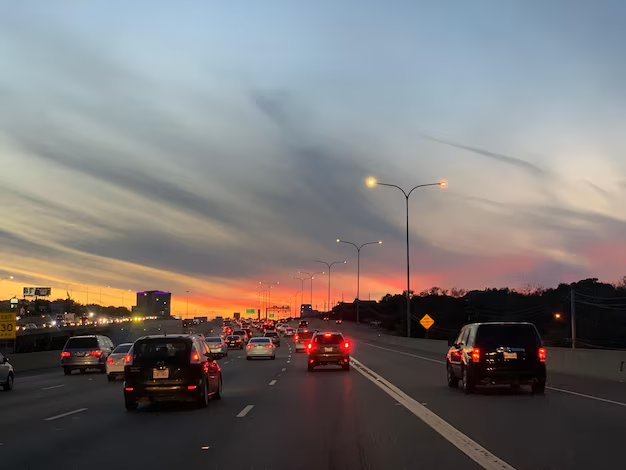
How Bad Is Atlanta Traffic, Really?
If you spend any time on I‑285, GA‑400, or the Downtown Connector, it can feel like Atlanta has the worst traffic in the country. But does it actually?
The short answer: Atlanta is consistently ranked among the most congested cities in the U.S., but it’s not always number one. Traffic here is serious and can be frustrating, especially at rush hour, but it’s more “top tier bad” than uniquely, impossibly bad.
For someone living in Atlanta, visiting, or planning a move, what matters more than the ranking is understanding when and where traffic gets rough, why it’s so congested, and how to work around it.
Is Atlanta Really One of the Worst Cities for Traffic?
Across different traffic and congestion rankings, Atlanta regularly appears in the top group of most congested U.S. cities, often alongside places like:
- Los Angeles
- New York City
- Chicago
- San Francisco
- Miami
In a typical year, Atlanta drivers are often shown to lose dozens of hours per year sitting in congestion. Because of that, locals often describe Atlanta traffic as one of the city’s biggest downsides.
However:
- Atlanta is not always #1 for worst traffic nationwide.
- On many lists, it lands somewhere in the top 5–15 depending on the methodology and year.
- Congestion also varies by time of day, direction of travel, and season.
So while traffic in Atlanta is objectively heavy and often stressful, it’s more accurate to say:
Why Is Atlanta Traffic So Bad?
Several local factors combine to make driving here a challenge.
1. Regional Hub With Heavy Through-Traffic
Atlanta sits at the crossroads of major interstate highways:
- I‑75 (Florida–Midwest corridor)
- I‑85 (Georgia–Carolinas–Northeast corridor)
- I‑20 (Georgia–Alabama–Texas corridor)
- I‑285 (Perimeter loop around the city)
These routes aren’t just for local drivers. Long-distance travelers and freight trucks use Atlanta’s interstates to cross the region. That means:
- Even if you’re just going from Decatur to Midtown, you share lanes with through-traffic that doesn’t stop in Atlanta at all.
- The Downtown Connector (I‑75/85), where two major interstates merge through the center of the city, becomes a magnet for congestion.
2. Sprawl and Commuter Patterns
The Atlanta metro area spreads across many counties (Fulton, DeKalb, Cobb, Gwinnett, Clayton, and beyond). Many people:
- Live far outside the core (e.g., Alpharetta, Marietta, McDonough, Lawrenceville)
- Work in major job centers like Downtown, Midtown, Buckhead, Perimeter Center, and Cumberland
That leads to:
- Long daily commutes into and out of the city
- Intense pressure on I‑75, I‑85, GA‑400, I‑20, and I‑285, especially at rush hour
- Overflow congestion onto major surface streets such as Peachtree Road, Roswell Road, Ponce de Leon Avenue, Memorial Drive, and Jimmy Carter Boulevard
3. Limited Alternatives to Driving for Many Trips
Atlanta does have public transit and other options, but they don’t reach every neighborhood or suburb equally:
- MARTA rail mainly serves Fulton and DeKalb Counties along key corridors (e.g., Downtown–Midtown–Buckhead, East/West I‑20 corridor).
- Many outer suburbs have limited or no rail access, and bus routes may not align with all work schedules.
- The region’s historic development has been car-focused, so many people still find that driving is the most practical option for everyday trips.
As a result, a large share of commuters drive alone, adding to congestion.
4. Weather and Driving Conditions
Atlanta’s climate brings its own traffic challenges:
- Heavy thunderstorms can slow speeds dramatically and cause spinouts or minor crashes.
- Occasional ice or snow events often create major slowdowns, because the city isn’t equipped for frequent winter storms and many drivers aren’t used to icy roads.
- Fog and low visibility around early morning rush can also lead to cautious driving and backups.
Because many roads are already near capacity during rush hour, even small disruptions quickly turn into long delays.
5. Construction and Ongoing Roadwork
With a growing population, Atlanta sees regular construction projects designed to add lanes, rebuild interchanges, and improve safety. These can temporarily worsen congestion:
- Lane closures on I‑285 (especially near interchanges with GA‑400 or I‑20)
- Long-term work on bridges and ramps
- Local resurfacing projects on major surface streets
The Georgia Department of Transportation (GDOT) and local agencies try to schedule some work at night or on weekends, but daytime and peak-hour impacts are still common.
Where Is Traffic Worst in Atlanta?
Some corridors are almost synonymous with congestion. Locals often mention the following as hot spots:
Major Highways and Interchanges
Downtown Connector (I‑75/85)
- Often extremely congested northbound in the afternoon and southbound in the morning
- Bottlenecks near I‑20, and at exits for Downtown, Midtown, and Georgia Tech
I‑285 (The Perimeter)
- Congestion is especially intense on the northern arc between I‑75 (Cumberland), GA‑400 (Sandy Springs), and I‑85 (Doraville)
- The “Top End Perimeter” has some of the most consistently heavy traffic in the region
GA‑400
- Heavy north–south commuter route between Buckhead/Sandy Springs and suburbs like Roswell, Alpharetta, Cumming
- Congested both mornings (southbound) and evenings (northbound)
I‑75 and I‑85 Approaches
- I‑75 north (toward Cobb County and Kennesaw) and I‑85 north (toward Gwinnett) both experience long rush-hour slowdowns
- Interchanges with I‑285 often back up in multiple directions
I‑20 East and West of Downtown
- Congestion approaching I‑75/85 from both directions
- Eastbound backups near Panola Road and westbound near I‑285 and Six Flags Drive
Busy Surface Streets
Even if you avoid the interstates, many arterial streets can be slow:
- Peachtree Road (Downtown through Midtown, Buckhead, and Brookhaven)
- Ponce de Leon Avenue (Decatur into Midtown)
- Northside Drive, Howell Mill Road, Roswell Road, and Cobb Parkway
- Memorial Drive, Moreland Avenue, and Cheshire Bridge Road
Traffic signals, frequent driveways, and turning vehicles can make these corridors slow-moving during peak times.
When Is Atlanta Traffic the Worst?
While traffic can happen anytime, congestion in Atlanta tends to follow predictable patterns.
Typical Rush Hours
- Morning rush: roughly 6:30 a.m. – 9:30 a.m.
- Evening rush: roughly 3:30 p.m. – 7:00 p.m.
These windows can shift depending on:
- School schedules
- Major events (sports, concerts, conventions)
- Weather and incidents
During these times, expect much slower speeds on:
- The Downtown Connector
- The Top End Perimeter (I‑285 north)
- GA‑400, I‑75, I‑85, and key surface streets radiating into job centers
Special Event and Weekend Traffic
Atlanta hosts many large events that dramatically affect traffic:
- Professional sports at Mercedes‑Benz Stadium, State Farm Arena, and Truist Park
- Concerts and festivals in Downtown, Midtown, and at venues like Chastain Park
- Conventions and trade shows at the Georgia World Congress Center
On event days, you may see intense congestion before and after events, even outside normal rush hours, especially:
- Around Downtown and Midtown
- Near Cumberland/Truist Park
- Around major parking decks and MARTA stations
Weekends can also be crowded on routes to popular destinations like:
- Hartsfield‑Jackson Atlanta International Airport
- Shopping districts in Buckhead, Perimeter, and Cumberland
- Outdoor spots like Piedmont Park, the BeltLine, and the Chattahoochee River corridor
How Does Atlanta Traffic Compare to Other Big Cities?
People who have lived in multiple large metro areas often describe Atlanta traffic this way:
- Similar or slightly better than Los Angeles or New York in terms of overall pain, but without the same density of transit alternatives.
- Comparable to cities like Miami, Houston, or Dallas, where sprawl and car dependence also create heavy congestion.
- More highway-focused than many Northeastern cities; long backups can occur at high speeds that suddenly drop to near standstill.
One distinction:
- In some cities, average speeds are low almost all the time.
- In Atlanta, off-peak periods can be relatively fast, but peak periods may feel severe because so much demand is concentrated in a few hours.
In other words, Atlanta isn’t uniquely bad, but it’s solidly in the “major traffic problem” category. For residents and visitors, planning around it is just part of everyday life.
Practical Ways to Cope With Atlanta Traffic
Whether you live here or are just visiting, there are clear strategies to make Atlanta traffic more manageable.
1. Time Your Trips Strategically
Whenever possible:
- Avoid peak rush hours for cross-town trips.
- If you must travel at peak times, leave extra time—often an additional 20–45 minutes for longer routes.
- Consider mid-morning (10 a.m.–2 p.m.) or later evening for airport runs, perimeter errands, or long drives across the metro.
2. Use Transit Where It Makes Sense (MARTA and More)
Atlanta’s main public transit system is MARTA (Metropolitan Atlanta Rapid Transit Authority), which operates:
- Rail lines serving Downtown, Midtown, Buckhead, the airport, and parts of East, West, and North Atlanta
- Bus routes across Atlanta and parts of Fulton and DeKalb Counties
Key points for riders:
MARTA Rail to the Airport:
- The Red and Gold lines go directly to Hartsfield‑Jackson Atlanta International Airport.
- Many travelers use MARTA to avoid parking and highway traffic.
Downtown/Midtown/Buckhead trips:
- If you’re staying or working near a rail station such as Five Points, Peachtree Center, Arts Center, North Avenue, Buckhead, or Lenox, MARTA can be faster than driving and searching for parking.
You can get maps, schedules, and fare information from:
MARTA Headquarters
2424 Piedmont Road NE
Atlanta, GA 30324
Customer Service: 404‑848‑5000
Other local transit services that may help depending on where you live or stay:
- Xpress (managed by the Atlanta-Region Transit Link Authority) – regional commuter buses connecting outlying counties with employment centers.
- CobbLinc, Gwinnett County Transit, and other county systems – local bus networks that feed into major job and shopping areas.
3. Consider Carpooling, Vanpools, or Employer Programs
Some commuters reduce their stress and costs by:
- Carpooling with coworkers or neighbors
- Using vanpools organized through employers or regional programs
- Staggering work hours to avoid peak congestion where possible
- Working remotely part-time if their job allows it
The Atlanta Regional Commission (ARC) and regional partners sometimes support programs that encourage ridesharing and flexible commuting.
4. Rely on Real-Time Traffic Information
Real-time tools are especially useful in Atlanta’s unpredictable traffic environment. You can:
- Check current speeds and incidents on major routes before you leave.
- Choose alternate routes if you see major slowdowns or accidents.
- Use navigation apps with live rerouting to adapt to changing conditions.
For official highway information:
Georgia Department of Transportation (GDOT)
Office: 600 West Peachtree Street NW
Atlanta, GA 30308
General Information: 404‑631‑1990
GDOT provides real-time incident and construction information for interstates and state routes across the Atlanta area.
5. Plan Around Big Events
If you know a major game, concert, or festival is happening:
- Check event times and avoid nearby roads 1–2 hours before and after.
- Consider MARTA to venues served by rail, such as:
- Mercedes‑Benz Stadium
- State Farm Arena
- Many Downtown and Midtown events
For Truist Park and the Battery Atlanta area, traffic around I‑75/I‑285 (Cobb Cloverleaf) can be intense; some visitors park farther away or arrive well ahead of game time to avoid the worst congestion.
6. Choose Housing and Hotels With Commute in Mind
If you’re moving to Atlanta or planning a longer stay:
- Map your home–work–school–regular destination triangle and think about time, not just distance.
- Twelve miles in Atlanta can take 15 minutes at off-peak or 45+ minutes during rush hour.
- Some people choose to live closer to MARTA rail, especially in neighborhoods like Midtown, Inman Park, Decatur, Buckhead, and Sandy Springs along the rail lines.
For visitors, staying in Downtown, Midtown, or Buckhead near MARTA can reduce the need to drive for many activities.
Quick Summary: How Bad Is Atlanta Traffic, and What Can You Do About It?
| Question | Short Answer |
|---|---|
| Does Atlanta have the worst traffic in the U.S.? | No, not consistently #1, but it’s regularly among the most congested major U.S. cities. |
| Is traffic a major daily issue for residents? | Yes. Many commuters experience long and unpredictable drive times. |
| When is it worst? | Weekday rush hours (6:30–9:30 a.m., 3:30–7:00 p.m.) and big event times. |
| Where is it worst? | The Downtown Connector, I‑285 (north), GA‑400, I‑75, I‑85, and major surface arterials. |
| Are there ways to avoid the worst of it? | Yes. Time your trips, use MARTA where possible, check real-time traffic, and plan ahead. |
| Is Atlanta drivable outside of rush hour? | Generally yes. Off-peak travel can be relatively smooth on most routes. |
For anyone living in or visiting Atlanta, traffic is a reality you have to plan around, but with smart timing, strategic route choices, and occasional use of transit, it’s manageable—even if it sometimes feels like the worst in the country when you’re stuck on the Connector.