
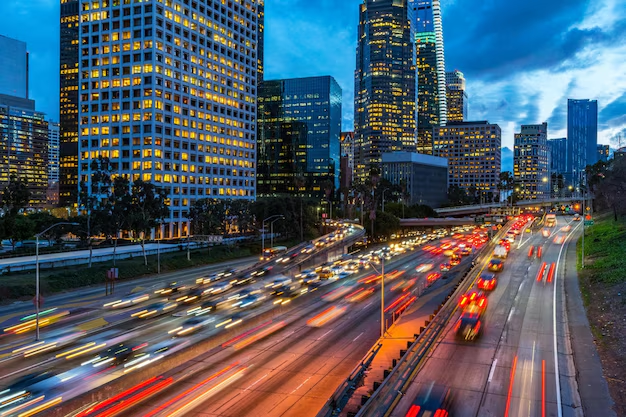
How Bad Is Atlanta Traffic? What Locals and Visitors Really Need To Know
Atlanta traffic has a big reputation—and not always a flattering one. If you live here, you feel it. If you’re visiting, you’ve probably heard the warnings. But how bad is Atlanta traffic really, and what does that mean for getting around the city day to day?
This guide breaks down what to expect on Atlanta roads, the worst choke points, typical rush hour patterns, and smart ways to avoid getting stuck.
How Bad Is Atlanta Traffic, Really?
In plain terms: Atlanta traffic can be very congested during peak times, especially on the interstates that ring and cut through the city. However:
- It’s not gridlocked 24/7. Outside rush hours, many routes are manageable.
- Congestion is highly concentrated around certain highways, interchanges, and corridors.
- Locals learn to plan around it with timing, alternate routes, and transit options.
If you’re used to driving in major cities like Los Angeles or Washington, D.C., Atlanta will feel familiar: heavy rush hours, lots of car dependence, and traffic that can suddenly appear due to crashes or weather.
If you’re from a smaller metro area, Atlanta will likely feel intense, especially:
- Weekday mornings and late afternoons
- Around big events (Falcons at Mercedes-Benz Stadium, concerts at State Farm Arena, events at Georgia World Congress Center, etc.)
- During heavy rain or storms
Where Atlanta Traffic Is Worst
Most of Atlanta’s worst traffic revolves around interstates and major connectors:
The Downtown Connector (I‑75/I‑85)
The Downtown Connector, where I‑75 and I‑85 merge through the center of Atlanta, is one of the city’s most notorious stretches.
Expect frequent slowdowns:
- Between I‑20 and the Brookwood Split (near Midtown)
- Near exits for Downtown, Midtown, and Georgia Tech
- Around Georgia State University and Mercedes-Benz Stadium/State Farm Arena exits
This area backs up quickly during rush hour, accidents, and major events.
I‑285 (The Perimeter)
I‑285 circles the city and is known locally as “the Perimeter.” It’s a key route for both local commuters and through-traffic.
Common trouble spots include:
- I‑285 at GA 400 (the “Top End” near Sandy Springs and Dunwoody)
- I‑285 at I‑75 (Cobb Cloverleaf near Cumberland and Truist Park)
- I‑285 at I‑85 (Spaghetti Junction on the northeast side, near Doraville)
- Western side of I‑285 near I‑20, especially in afternoon rush
I‑285 often carries a mix of commuters and heavy trucks, which can slow everything down.
I‑75, I‑85, and I‑20 Outside the Core
Outside the central city, these interstates can also get very congested:
- I‑75 north: Marietta, Kennesaw, and Cobb County into the city
- I‑85 north: Gwinnett County into Doraville, Chamblee, and Midtown
- I‑20 east and west: Particularly where they meet I‑285 and around Downtown
Major Surface Streets
Even if you avoid the highways, some arterial roads are known for heavy traffic:
- Peachtree Street/Peachtree Road: Downtown through Midtown, Buckhead, and Brookhaven
- Roswell Road: Through Sandy Springs into north Atlanta
- Ponce de Leon Avenue (Ponce): East of Midtown, near the BeltLine and Ponce City Market
- Moreland Avenue: East Atlanta and Little Five Points area
- Cobb Parkway (US 41): Near Cumberland and Truist Park
These corridors are often slower but can be more predictable than the interstates.
When Is Atlanta Traffic the Worst?
Traffic patterns in Atlanta are fairly consistent, with some variations.
Weekday Rush Hours
Typical weekday peak times:
- Morning: 7:00 a.m. – 9:30 a.m.
- Evening: 3:30 p.m. – 6:30 p.m.
During these windows, expect:
- Stop‑and‑go on the Downtown Connector
- Heavy delays on I‑75, I‑85, I‑20, and I‑285 near major junctions
- Slower travel across Midtown, Downtown, Buckhead, and Perimeter Center
If you can shift your schedule:
- Leaving before 7:00 a.m. or after 9:30 a.m. helps in the morning
- Leaving before 3:30 p.m. or after 7:00 p.m. helps in the afternoon/evening
Weekend Traffic
Weekends are less predictable:
- Saturday midday and evening can feel like rush hour, especially near malls, event venues, and shopping districts (Cumberland, Lenox Square/Phipps Plaza, Atlantic Station).
- Game days and concerts can spike traffic around I‑20, I‑75, and I‑85 near Downtown and the Georgia World Congress Center campus.
- Sunday mornings are often calm, while late afternoon can slow near interstates as people return home.
Weather, Construction, and Crashes
Atlanta traffic is very sensitive to:
- Rain and thunderstorms
- Construction projects (lane closures on I‑285 and the Connector are common)
- Crashes and stalled vehicles, which can turn a minor slowdown into a major delay
Minor fender-benders on the Connector or Perimeter can back up traffic for miles.
Typical Drive Times Around Atlanta
Actual times vary day to day, but these ballpark ranges can help you plan:
| Route (Normal Conditions) | Non-Rush Hour | Rush Hour (Approx.) |
|---|---|---|
| Hartsfield-Jackson Airport → Downtown | 15–25 min | 25–45+ min |
| Downtown → Midtown | 5–15 min | 15–30+ min |
| Midtown → Buckhead (via I‑85 or Peachtree) | 10–20 min | 20–40+ min |
| Buckhead → Perimeter Center (GA 400/I‑285) | 10–20 min | 20–40+ min |
| Marietta (Cobb) → Downtown via I‑75 | 25–40 min | 40–70+ min |
| Gwinnett (Duluth/Norcross) → Midtown via I‑85 | 25–40 min | 45–75+ min |
| Decatur → Downtown (via Ponce or I‑20) | 15–25 min | 25–45+ min |
These are general ranges, not guarantees. Always add extra time if you have a flight, important meeting, or event.
Getting Around Atlanta Without Losing Your Mind
You can’t eliminate Atlanta traffic, but you can work around it.
1. Time Your Trips Strategically
A 20‑minute drive can become an hour at the wrong time. To reduce stress:
- Schedule appointments mid‑morning (10 a.m.–2 p.m.) when possible.
- For airport trips, add at least 20–30 minutes beyond your normal drive time, especially in the afternoon.
- If you must travel during rush hour, use apps for real‑time routing and incident alerts.
2. Use MARTA Where It Makes Sense
Atlanta’s main public transit system, MARTA (Metropolitan Atlanta Rapid Transit Authority), runs rail and bus service throughout the city and some suburbs.
Key MARTA rail lines can help you skip highway traffic:
- Airport Station: Inside Hartsfield-Jackson’s Domestic Terminal
- Downtown: Five Points Station and stations near major venues
- Midtown: North Avenue, Midtown, and Arts Center stations
- Buckhead/Lenox: Buckhead, Lenox, and Lindbergh Center stations
- Perimeter/Medical Center: Sandy Springs, Dunwoody, Medical Center
MARTA is especially helpful for:
- Getting from the airport to Downtown or Midtown
- Reaching events (Mercedes‑Benz Stadium, State Farm Arena) without paying high parking fees or getting stuck post-game
- Commuting from inside the I‑285 corridor into central job centers
For route info, maps, and service updates, you can contact MARTA’s main office:
- MARTA Headquarters
2424 Piedmont Rd NE
Atlanta, GA 30324
Phone: 404‑848‑5000
3. Consider Park-and-Ride Lots
If you live or stay farther out, you can park at a MARTA station and take rail into the city, avoiding the worst traffic near the core.
Many MARTA stations, especially outside central Atlanta, have parking lots or garages (some free, some paid).
Examples include:
- Dunwoody Station (Perimeter area)
- North Springs Station (end of GA 400 line)
- Indian Creek Station (east of I‑285)
- College Park Station (south of the airport)
4. Take Advantage of HOV and Express Lanes
Some metro Atlanta interstates have:
- HOV lanes (High‑Occupancy Vehicle) for carpools
- Express lanes (toll lanes) on segments of I‑75, I‑85, and I‑575
These lanes can move faster than general traffic, especially during peak hours. To use toll express lanes, you typically need a Peach Pass transponder issued by the State Road and Tollway Authority (SRTA):
- SRTA / Peach Pass Customer Service Center
245 Peachtree Center Ave NE, Suite 2200
Atlanta, GA 30303
Phone: 1‑855‑724‑7277
Using HOV or express lanes can significantly cut commute times if they fit your route and budget.
5. Learn Local Back Roads (But Use Them Wisely)
Many Atlantans have favorite “cut‑throughs” to avoid the worst highway gridlock, such as:
- Piedmont Road as an alternate to parts of GA 400/I‑85
- Northside Drive near Downtown instead of the Connector
- Moreland Avenue or side streets instead of I‑20 in some stretches
However, during heavy traffic, these can also clog up. Always check real‑time conditions before bailing off the highway.
What Visitors Should Know About Atlanta Traffic
If you’re flying into Atlanta or visiting for the first time, a few specific points help set expectations.
Getting From the Airport
Hartsfield-Jackson Atlanta International Airport sits directly on I‑85, just south of the city.
Your main options:
- 🚇 MARTA Rail: The Airport Station is inside the Domestic Terminal. Rail to Downtown/Midtown is often faster and more predictable than driving during rush hour.
- 🚗 Rideshare/Taxi: Convenient but can be slower during peak hours, especially heading north on I‑85.
- 🚙 Rental Car: Makes sense if you’ll be exploring outside central Atlanta but plan for traffic and parking in dense neighborhoods.
If you land in the late afternoon, assume that driving into town will face heavy congestion.
Driving Around Downtown and Midtown
Inside the central city:
- Interstates are fast between backups, but can stall suddenly.
- Surface streets like Peachtree, Spring, West Peachtree, and Courtland can be congested but are often easier for shorter point‑to‑point trips.
- Many attractions (World of Coca‑Cola, Georgia Aquarium, Centennial Olympic Park, Mercedes‑Benz Stadium) are walkable or MARTA‑accessible from central hotels.
Visitors unfamiliar with complex freeway interchanges often prefer MARTA or rideshare for central-city trips to avoid stressful merges and lane changes.
What New Residents Should Expect
Moving to Atlanta often comes with a driving adjustment.
Car Dependence Is Common
While some neighborhoods are walkable or transit-friendly, much of metro Atlanta is designed around driving. Many people:
- Drive to work, school, and errands
- Regularly use interstates or major surface roads
- Factor traffic into housing and job decisions
Commuting Patterns Vary by Direction
Travel direction makes a big difference:
- Going from the suburbs into the city in the morning and out in the evening is usually heaviest.
- Reverse commutes (city to suburbs) can be lighter but are still affected by crashes and construction.
- Jobs in Perimeter Center, Cumberland, Buckhead, and Midtown draw heavy traffic from all directions.
Before signing a lease or buying a home, many locals test drive the commute at peak time to see what it really feels like.
Is Atlanta Traffic Getting Better or Worse?
Over time, Atlanta traffic has generally:
- Remained busy and often congested, especially as the metro area grows.
- Seen major road projects (like rebuilding interchanges, adding express lanes, and the I‑285/GA 400 improvements) aimed at improving flow.
- Added more transit options and discussions around expanding rail, bus rapid transit, and bike infrastructure in certain corridors.
For drivers, this means:
- Short‑term: construction zones can cause new backups.
- Long‑term: some bottlenecks ease, but overall demand for road space stays high.
Practical Tips to Handle Atlanta Traffic
To make daily life easier in Atlanta, it helps to adopt a few local habits:
- Check traffic before you leave. Use navigation apps for real‑time speeds, accidents, and construction.
- Build in a buffer. For flights, medical appointments, or job interviews, add at least 20–30 minutes extra during busy times.
- Combine errands. Group trips to avoid repeatedly crossing the same congested corridors.
- Know a Plan B (and C). Have alternate routes ready in case of major incidents.
- Use transit when it clearly wins. Airport trips, big Downtown events, and central-city commutes are often calmer with MARTA.
- Adjust your schedule if possible. Even a 30‑minute shift earlier or later can make a noticeable difference.
So… How Bad Is Atlanta Traffic?
Atlanta traffic is serious enough that you must plan around it, but it’s also manageable if you understand local patterns and use the tools available.
- You will encounter slowdowns and stop‑and‑go on major roads, especially during commute hours and big events.
- You can often avoid the worst of it by adjusting your timing, using MARTA where it’s strong, trying HOV/express lanes, and learning realistic travel times.
- For both residents and visitors, a little advance planning goes a long way toward turning “How bad is Atlanta traffic?” into “It’s busy—but I can handle it.”