
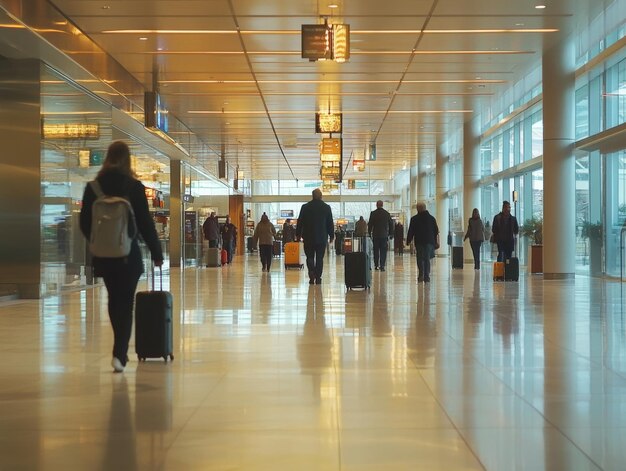
How Busy Is Atlanta Airport? A Clear Look at Daily Passenger Traffic at ATL
Hartsfield–Jackson Atlanta International Airport (ATL) is known around the world for one big reason: it is consistently one of the busiest airports on the planet. If you live in Atlanta, are visiting the city, or just flying through, it’s natural to wonder:
How many passengers actually go through Atlanta Airport per day?
Average Daily Passenger Volume at Atlanta Airport
While numbers can shift slightly from year to year, Atlanta’s airport typically handles:
- Around 260,000–300,000 passengers per day on average
- Well over 100 million passengers per year in many recent years
That daily figure includes both:
- Origin and destination passengers (people starting or ending their trip in Atlanta)
- Connecting passengers (people changing planes at ATL without leaving the secure area)
On many days, especially during peak travel seasons (summer, major holidays, and big event weekends), daily passenger counts can be significantly higher than the average.
Why Atlanta’s Airport Is So Busy
ATL doesn’t just serve Atlanta—it serves as a major national and international hub.
Key reasons the numbers are so high:
Major hub for domestic connections
ATL is a central connecting point for flights all over the United States, especially the East and Southeast.Large airline hub operations
A major carrier and several other airlines operate many daily departures and arrivals, making ATL a key transfer point.Strong local demand
Metro Atlanta’s population, business activity, convention traffic, and tourism all generate a large number of local passengers starting or ending their trip here.International gateway
ATL’s International Terminal (Concourse F and E) handles flights to and from Europe, Latin America, the Caribbean, Africa, and other regions, adding more daily travelers.
How Daily Passenger Traffic Feels to Travelers
The daily numbers matter because they shape what your experience at ATL is like.
Peak Times During a Typical Day
Passenger flow at Atlanta Airport is not evenly spread. You’re more likely to feel the crowds during:
- Early morning (5:30 a.m.–9:00 a.m.)
Heavy with business travelers and East Coast departures. - Midday (11:00 a.m.–2:00 p.m.)
Strong wave of connections arriving and departing. - Late afternoon to early evening (4:00 p.m.–7:30 p.m.)
Another big bank of flights, especially connections and returns.
If you’re an Atlanta resident heading out of town, these windows are when security lines and parking garages tend to feel the impact of those hundreds of thousands of passengers per day.
Terminal Layout and Where Those Passengers Go
Despite the huge daily volume, ATL is designed to move people efficiently through its “spoke and wheel” layout.
Main Areas of the Airport
Domestic Terminal (North & South)
- Most Atlanta-based travelers check in here.
- South Terminal primarily handles flights of the largest hub carrier.
- North Terminal serves many other domestic airlines.
Concourses T, A, B, C, D, E, F
- Connected by the Plane Train underground people-mover.
- Concourse T connects directly to the Domestic Terminal.
- Concourses E and F primarily handle international flights.
Maynard H. Jackson Jr. International Terminal (Concourse F)
- Often used by international origin/destination passengers.
- Has its own roadway entrance and parking.
Each day, those 260,000–300,000+ passengers are spread across these terminals and concourses, with heavy concentration in the hub carrier’s concourses and in the main connecting corridors.
What Daily Volume Means for Your Timing and Planning
Knowing that ATL is serving hundreds of thousands of people every day can help you plan smarter.
Recommended Arrival Times
Because of high daily passenger traffic, many travelers find these timeframes helpful:
Domestic flights
- Arrive at the airport 2 hours before departure during normal times.
- Consider 2.5 hours or more during busy holidays or early Monday mornings.
International flights
- Plan for 3 hours before departure, especially if:
- You’re checking bags.
- You’re traveling with family or in a group.
- You’re unfamiliar with the airport layout.
- Plan for 3 hours before departure, especially if:
These buffers account for:
- Parking or rideshare drop-off traffic
- Check-in and bag drop lines
- TSA security screening wait times
- Riding the Plane Train to your concourse
- Finding your gate and boarding on time
Security Lines: How Passenger Volume Affects Wait Times
With so many travelers per day, TSA checkpoints at ATL can get crowded, especially:
- At the Main Security Checkpoint between North and South Domestic Terminals.
- During early morning and late afternoon peaks.
Tips to Navigate Security More Smoothly
Consider the smaller checkpoints
- The North and South checkpoints sometimes have different wait times than the Main checkpoint.
- International Terminal (Concourse F) has its own TSA checkpoint, which can be useful if you’re starting your trip there.
Travel light if possible
- Fewer bags often means fewer delays in line and faster screening.
Check security wait time boards
- ATL commonly posts wait time estimates on screens near entrances and within the terminal.
These strategies can make a noticeable difference when you’re sharing the airport with hundreds of thousands of other travelers that day.
Ground Transportation: Moving All Those People In and Out of Atlanta
With such a high passenger volume, ground transportation is also extremely active.
Common Options for Getting To and From ATL
MARTA (Public Transit)
- The Airport Station is directly inside the Domestic Terminal, at the end of the Red and Gold Lines.
- A popular choice for city residents and Downtown, Midtown, and Buckhead visitors.
- Avoids highway congestion during peak times.
Rideshare (Uber, Lyft, etc.)
- Dedicated Rideshare Pick-Up areas are clearly marked.
- High passenger volumes can mean:
- Surge pricing at very busy times.
- Longer wait times for drivers during major events or storms.
Airport shuttles and hotel shuttles
- Many area hotels around Hapeville, College Park, and near the Airport corridor run regular shuttles.
- Shared shuttles serve more distant suburbs and regional cities.
Taxis and limousines
- Taxi stands are available outside baggage claim.
- Traffic near the airport can be heavy during peak arrival and departure waves.
Parking
- ATL offers:
- Domestic Terminal Parking (North and South)
- International Terminal Parking
- Economy and Park-Ride lots
- Lots can fill or get crowded on days when daily passengers spike above average, especially around holidays.
- ATL offers:
Typical Daily Traffic by Travel Season (High-Level Snapshot)
Below is a simple overview of how daily passenger counts at ATL tend to feel by season. These are relative trends, not exact figures.
| Time of Year | Relative Daily Volume | What Travelers Notice Most |
|---|---|---|
| January–February (non-holiday) | Medium | Slightly shorter lines except holiday weekends |
| March–April (Spring Break) | High | Very busy checkpoints, crowded gates |
| May–August (Summer) | High–Very High | Families, tourists, fuller flights, busy parking |
| September–October | Medium–High | Steady business travel, some conferences and events |
| November–December Holidays | Very High | Packed terminals, longer waits, higher roadway traffic |
If you’re flying at the very start or end of these busy periods, you’re more likely to experience the upper end of ATL’s daily passenger flow.
Key Contacts and Local Resources
If you are in Atlanta and want airport-specific information tied to that massive daily passenger volume, these official resources are useful starting points:
Hartsfield–Jackson Atlanta International Airport – General Information
- Address: 6000 N Terminal Parkway, Atlanta, GA 30320
- Main Airport Information Line: (800) 897-1910 (commonly listed as a public info number)
MARTA Customer Information
- Main Line: (404) 848-5000
- Useful for planning rail or bus trips between ATL and neighborhoods across metro Atlanta.
City of Atlanta – Department of Aviation (Airport Administration)
- General Administrative Offices located on airport property.
- Best for policy, planning, and non-travel questions about airport operations.
Always verify specific hours and service details before you go, especially around major holidays when daily passenger counts are at their highest.
Quick Takeaways for Atlanta Travelers
- Daily passenger traffic at ATL commonly sits around 260,000–300,000 people or more.
- Heavy daily volume is normal; it’s part of why Atlanta is a major global air hub.
- Expect busiest times early morning, midday, and late afternoon.
- Arrive 2 hours early for domestic and 3 hours early for international flights, especially during peak seasons.
- Use MARTA, rideshare, and shuttles to avoid congestion on the roads and in parking lots.
Understanding how many passengers go through Atlanta Airport per day gives you a clearer sense of why ATL feels so busy—and helps you plan a smoother trip in and out of Atlanta.