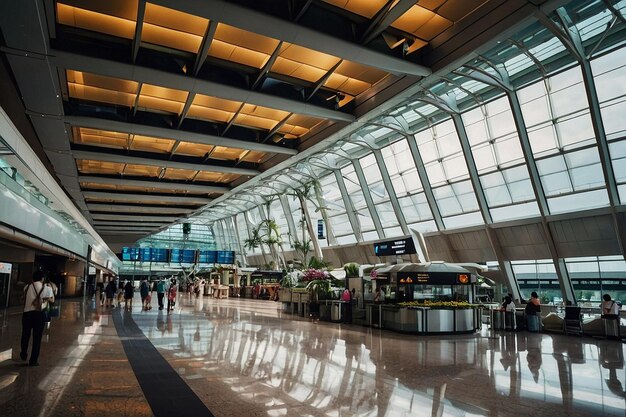
How Big Is Atlanta’s Airport, Really? What to Know About Hartsfield‑Jackson

If you’re wondering whether Atlanta has a big airport, the answer is simple: yes — it’s one of the biggest and busiest in the world. For anyone living in Atlanta, visiting the city, or trying to figure out how to get here and around, understanding Hartsfield‑Jackson Atlanta International Airport (ATL) is essential.

This guide breaks down what “big” means in practice — from size and terminals to getting around, connections, and what to expect on the ground.

How Big Is Atlanta’s Airport?

Hartsfield‑Jackson Atlanta International Airport (ATL) is widely known as:

  • One of the world’s busiest airports by passenger volume
  • A major hub for domestic and international travel
  • A central connection point for flights across the United States and abroad

In practical terms for travelers:

  • You’ll find multiple concourses, long walking distances, and lots of gates.
  • You should expect crowds, especially during mornings, evenings, and holidays.
  • There are extensive dining, shopping, and service options across the airport.

If you think of “big” in terms of number of flights, destinations, and passengers moving through daily, Atlanta is about as big as it gets in the U.S.

Basic Layout: Terminals and Concourses

Atlanta’s airport is large but logically laid out. Once you understand the structure, it feels less overwhelming.

Terminals vs. Concourses

ATL has two main terminal buildings and multiple concourses:

  • Domestic Terminal
    • North Terminal (primarily Delta counters and some others)
    • South Terminal (other major airlines’ counters)
  • International Terminal (Maynard H. Jackson Jr. International Terminal) – Concourse F

Behind security, both terminals connect to:

  • Concourse T (closest to Domestic Terminal)
  • Concourse A
  • Concourse B
  • Concourse C
  • Concourse D
  • Concourse E
  • Concourse F (international)

All concourses are arranged in a straight line and connected underground by the Plane Train, making it possible to move between them relatively quickly despite the airport’s size.

Getting Around Inside a Big Airport

Because ATL is large, getting around is a key part of the experience.

Plane Train (Automated People Mover)

Once you’re through security, you’ll likely use the Plane Train, an underground tram system that:

  • Connects all concourses plus both terminals
  • Runs frequently
  • Is clearly marked with audio and visual announcements

This is usually the fastest way to move between concourses, which is especially important for tight connections.

Walking Between Concourses

ATL also offers a walkable tunnel with moving walkways between concourses:

  • Good if you prefer to walk or stretch your legs
  • Features art installations and informational displays
  • May take longer than the Plane Train, especially between distant concourses

For many travelers, a mix of Plane Train for distance and walking within a concourse works well.

Key Distances and Timing: How Long Will You Need?

Because the airport is so big, timing matters.

  • Security to your gate: Plan at least 30–45 minutes, more during peak times.
  • Connecting between concourses: Often 10–20 minutes, including walking and waiting for the Plane Train.
  • From curb to gate for domestic flights: Many travelers aim to arrive 2 hours before departure.
  • For international flights: Arriving 3 hours before is a common guideline.

These are general patterns; exact timing depends on:

  • Time of day
  • Day of week
  • Whether you check bags
  • Your airline and concourse

Quick Overview: How Big Is ATL in Practice?

QuestionShort Answer for Atlanta Travelers
Is Atlanta a big airport?Yes. It’s one of the busiest in the world and a massive U.S. hub.
Does it have multiple terminals?Yes. Domestic Terminal (North & South) and an International Terminal
Are there many concourses and gates?Yes. Concourses T, A, B, C, D, E, F with many gates each.
Is it easy to get lost?It’s large, but well‑signed. Follow your concourse and gate numbers.
Is there a train inside the airport?Yes. The Plane Train connects all concourses and terminals.
Is connecting through ATL manageable?Usually yes, if you allow enough time and know your concourse.

What It’s Like to Fly Into or Out of Atlanta

If You Live in Atlanta

For Atlanta residents, ATL is a major advantage:

  • Nonstop flights to most major U.S. cities and many international destinations
  • Frequent options for:
    • Work trips
    • Family visits
    • Last‑minute travel

Things local residents tend to care about:

  • Parking: On‑site parking garages and long‑term lots, plus many off‑site lots around the airport.
  • Rideshare and taxis: Clearly signed pick‑up areas at the Domestic and International Terminals.
  • MARTA access: A direct rail connection from the city’s MARTA system.

If You’re Visiting Atlanta

ATL is often your first impression of the city:

  • Expect a busy, well‑organized environment.
  • Plan a bit of extra time to:
    • Navigate from your gate to baggage claim
    • Find ground transportation (rental car, MARTA, rideshare, shuttle)

Look for overhead signs directing you to:

  • Ground Transportation
  • MARTA
  • Rental Cars
  • International Terminal Shuttle (if needed)

Getting Between the Airport and Atlanta

Even though ATL is a huge airport, getting to and from the city is straightforward.

MARTA (Rail)

MARTA’s Airport Station is located inside the airport at the Domestic Terminal.

  • Good for:
    • Travelers staying in Downtown, Midtown, Buckhead, or near MARTA stops
    • Avoiding traffic and parking costs
  • Access:
    • Follow signs for “Ground Transportation” and “MARTA” from baggage claim.

MARTA can be especially helpful if you’re:

  • Attending an event at the Georgia World Congress Center, Mercedes‑Benz Stadium, or State Farm Arena
  • Staying near Peachtree Center, Midtown, or Lenox

Driving, Rideshare, and Taxis

If you’re driving or being picked up:

  • Domestic Terminal Address:
    • Hartsfield‑Jackson Atlanta International Airport
      6000 N Terminal Pkwy
      Atlanta, GA 30320
  • Clearly marked lanes and signs for:
    • Arrivals/Departures
    • Short‑Term Parking
    • Long‑Term and Economy Parking
    • Rideshare Pick‑Up Zones

Rideshare services typically use designated pick‑up areas, so follow airport signage or app instructions.

Rental Cars

Atlanta’s size means many travelers rely on rental cars:

  • All major rental brands are consolidated at the Rental Car Center (RCC) near the airport.
  • You reach the RCC via the SkyTrain, an elevated train connecting:
    • Domestic Terminal
    • Rental Car Center
    • Nearby hotels (select locations)

Follow signs for “Rental Car Center” once you exit baggage claim.

Domestic vs. International: How Big Feels Different

ATL’s size shows up differently for domestic and international travelers.

Domestic Travel

Most people experience ATL as:

  • A major hub with flights going almost everywhere in the U.S.
  • A place where connections are very common (many routes pass through Atlanta)
  • A busy airport but with clear signage and strong infrastructure to handle the volume

You’ll typically:

  • Check in at the Domestic Terminal
  • Go through TSA security
  • Take the Plane Train to your concourse (T, A, B, C, D, or sometimes E)

International Travel

If you’re arriving from or departing to another country:

  • You’ll typically use the Maynard H. Jackson Jr. International Terminal (Concourse F) or Concourse E.
  • Expect:
    • Passport control and customs on arrival
    • A separate International Terminal entrance on the east side of the airport

International Terminal Address:

  • Maynard H. Jackson Jr. International Terminal
    2600 Maynard H. Jackson Jr. Blvd
    Atlanta, GA 30354

Shuttles connect the Domestic and International sides for travelers who need to move vehicles or meet family.

Tips for Navigating Such a Large Airport

ATL’s size can feel intimidating, but a few habits make it manageable:

  • Check your concourse and gate early.
    This tells you whether you’ll be near T or all the way at F.

  • Follow the signs, not just the crowd.
    Overhead signage is clear and color‑coded for Ground Transportation, Baggage Claim, MARTA, and Concourses.

  • Allow buffer time for connections.
    Especially if shifting between far concourses (for example, from T to F) or if you’re traveling with kids or mobility needs.

  • Use the Plane Train for long distances.
    🟢 Tip: When in doubt, hop on the Plane Train and listen for your concourse.

  • If you need help, ask.
    Airport staff, information desks, and many gate agents are used to helping travelers navigate this large space.

Is Atlanta a Big Airport? What That Means for You

So, is Atlanta a big airport? Absolutely — in size, traffic, and importance.

For someone living in or visiting Atlanta, Georgia, this means:

  • You have access to one of the most connected airports in the world.
  • You should plan for crowds, walking, and multiple concourses.
  • With a little preparation — knowing your terminal, concourse, and ground transport options — navigating this big airport becomes routine.

Whether you’re flying out for a weekend trip, connecting through ATL, or arriving in the city for the first time, understanding the scale and layout of Hartsfield‑Jackson will make your experience smoother and less stressful.