
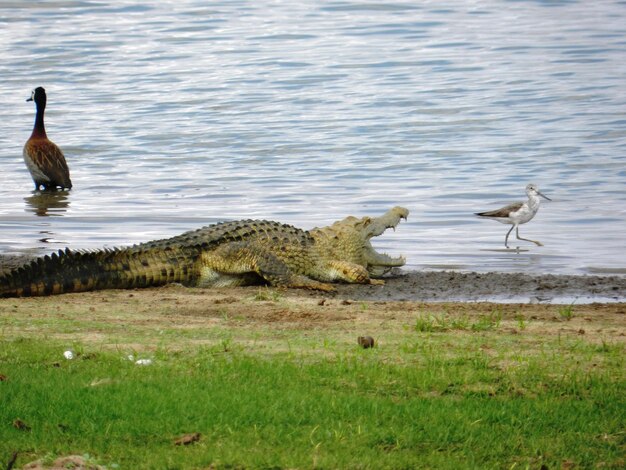
Are There Alligators In Atlanta? What Locals Really Need To Know
If you’ve spent any time around Atlanta lakes or scrolling local Facebook groups, you’ve probably seen the question: are there alligators in Atlanta?
Short answer: they’re not common in the City of Atlanta itself, but they absolutely exist in metro Atlanta and north Georgia, and they occasionally turn up closer than you’d expect.
This guide walks through where alligators actually live, how often they show up around Atlanta, who to call if you see one, and how to stay safe around our creeks, lakes, and rivers.
Alligators in Georgia: The Big Picture
Before zooming in on Atlanta, it helps to understand how Georgia’s alligator range works.
- Natural range: American alligators are native to southern and coastal Georgia. They’re most common in:
- The Okefenokee Swamp
- Coastal marshes
- South Georgia rivers and lakes
- State line: Wildlife in Georgia, including alligators, is managed by the Georgia Department of Natural Resources (DNR), Wildlife Resources Division — not by the City of Atlanta or the counties.
While the official “core” range is south of the Fall Line (roughly Columbus–Macon–Augusta), alligators are highly mobile. They sometimes move up major rivers and drainage systems, which is how they end up closer to metro Atlanta than most people realize.
So… Are There Alligators in the Atlanta Area?
Inside the City of Atlanta (Fulton & DeKalb)
The City of Atlanta stretches across Fulton County and DeKalb County, with creeks, ponds, and small lakes scattered from Buckhead and Midtown to Cascade and East Lake.
- Alligators are not considered resident wildlife in Atlanta.
- They are occasionally reported, usually as a surprise sighting:
- In ponds and small lakes
- Along the Chattahoochee River corridor northwest of the city
- In retention ponds near interstates or industrial areas
Most of these are believed to be either:
- Transient alligators following waterways north, or
- Relocated or released animals (illegally kept as pets or moved by people who didn’t want them).
City agencies do not treat Atlanta as routine “alligator country,” but they do have protocols for when one shows up.
Metro Atlanta and Nearby Counties
Alligators are much more plausibly encountered in the broader metro area than inside the city core, especially:
- Along the Chattahoochee River corridor in Cobb, Douglas, and south Fulton
- Around larger reservoirs and wetlands in counties south and east of Atlanta, such as:
- Parts of Coweta, Fayette, Henry, Newton, and Rockdale Counties
- In and around major lakes and river floodplains in middle Georgia, which many Atlantans visit for fishing and boating
If you spend time on larger lakes or rivers south of I‑20, it’s reasonable to assume alligators might be present, even if you never see one.
How Likely Am I to See an Alligator in Atlanta?
For most city residents — especially in Intown neighborhoods like Virginia-Highland, Inman Park, West End, Old Fourth Ward, or Midtown — the honest answer is:
But “unlikely” is not the same as “impossible.”
Typical Atlanta Outdoor Spots and Alligator Risk
Here’s a quick overview of common Atlanta-area nature spots and the realistic alligator situation:
| Area / Waterbody | County / Jurisdiction | Alligator Reality for Visitors |
|---|---|---|
| Piedmont Park Lake Clara Meer | City of Atlanta (Fulton) | Extremely unlikely. Not considered alligator habitat. |
| Chastain Park, Cascade Springs, local creeks | City of Atlanta (Fulton/DeKalb) | Unlikely. If one were reported, it would be treated as unusual. |
| Chattahoochee River National Recreation Area (Cochran Shoals, Island Ford, etc.) | Cobb, Fulton, others | Historically very rare, but the river could carry a stray animal upstream. |
| Smaller retention ponds near I‑285 / I‑20 | Various cities & unincorporated areas | Occasionally see reports; almost always handled as unusual one-off sightings. |
| Lakes and ponds south of Atlanta (Henry, Fayette, Coweta, etc.) | County / city dependent | More plausible alligator territory. Stay alert and follow DNR guidance. |
If you stay on Atlanta’s BeltLine, neighborhood parks, or typical city creeks, you can treat alligators as a very low‑probability concern.
Who Handles Alligators in and Around Atlanta?
Jurisdiction matters in metro Atlanta. If you see what you think is an alligator, your choices depend on exactly where you are.
1. Anywhere in Georgia: Georgia DNR
The lead agency is always the Georgia Department of Natural Resources – Wildlife Resources Division.
- They manage native wildlife, including alligators.
- They set hunting and nuisance control rules statewide.
If there’s a confirmed alligator in an unexpected place, local police or animal control will typically coordinate with DNR rather than acting alone.
2. Inside the City of Atlanta
If you’re inside city limits (either Fulton or DeKalb side of Atlanta):
- Use ATL311 (phone, app, or web) for non-emergency reports about wildlife concerns in city parks, creeks, or neighborhoods.
- For immediate safety threats (an alligator close to people, playgrounds, or pets):
- Call 911, which routes to the Atlanta Police Department and, if needed, Atlanta Fire Rescue Department.
- They can coordinate with animal control and Georgia DNR.
City of Atlanta staff may involve:
- Department of Parks and Recreation if the issue is in a city park or lake.
- Watershed Management if it involves stormwater ponds or water infrastructure.
You don’t need to pick the perfect agency — 911 for urgent threats, ATL311 for everything else is the practical rule.
3. Other Cities and Unincorporated Areas (Cobb, DeKalb, etc.)
If you’re not sure you’re in the City of Atlanta — for example:
- Sandy Springs, Brookhaven, or Dunwoody (separate cities, mainly in Fulton/DeKalb)
- Smyrna or Marietta (Cobb County)
- Decatur (a city in DeKalb County, not an Atlanta neighborhood)
Then:
- Use that city’s police non-emergency or animal services for local reports.
- If you’re in unincorporated county (e.g., parts of south Fulton, south DeKalb, or rural areas coming into metro), report to:
- The county police or sheriff’s office
- The county’s animal control if they have one
In serious situations, local agencies will still loop in Georgia DNR.
What To Do If You Think You See an Alligator in Atlanta
Seeing an alligator where you don’t expect one can be unnerving. Here’s what to do if you spot something in Atlanta or nearby suburbs.
1. Stay Back and Keep Others Back
Whether it’s a log or a 6‑foot gator, your behavior should be the same:
- Do not approach for a closer picture.
- Keep kids and pets away from the water’s edge.
- Avoid throwing food or objects toward the animal.
Alligators can move faster than most people expect over short distances. Even if attacks are rare in Georgia, you never want to test the odds.
2. Observe From a Distance
If you can safely do so:
- Note the exact location (park name, cross streets, trail, or nearby landmark).
- Estimate size in simple terms: “maybe 3 feet,” “about as long as a bicycle,” etc.
- Note what it’s doing:
- Basking on a bank
- Floating near a dock
- Moving toward a populated area
This helps responders decide whether it’s likely an alligator and how urgent it is.
3. Report It to the Right People
Use this rule of thumb:
- Immediate danger to people or pets?
- Call 911 and clearly say you’re reporting a possible alligator and your location.
- No immediate danger, but it’s in a city of Atlanta park or pond?
- Use the ATL311 app, website, or phone line and file a service request under wildlife or public safety.
- In another metro city or county?
- Call that city’s police non-emergency or animal control.
- If you’re comfortable and it’s a more rural setting:
- You can also contact Georgia DNR – Wildlife Resources Division directly; search for their regional office that covers your county.
You do not need to confront the animal or try to block it. Just get people away from the area and make the call.
Common Myths About Alligators in Atlanta
Myth 1: “Alligators can’t live this far north.”
Reality:
While stable, breeding populations are primarily in south Georgia, individual alligators can absolutely travel north along rivers and floodplains. There have been documented alligators in north Georgia over the years, usually near larger rivers and lakes.
Myth 2: “If an alligator is small, it’s harmless.”
Reality:
Even smaller alligators can:
- Bite hard enough to cause real injury
- Move quickly in short bursts
- Become food-conditioned if people start feeding them
Georgia DNR’s general stance is that an alligator:
- That avoids people and stays in remote water is wildlife and is usually left alone.
- That associates humans with food or hangs out near high-traffic areas is a problem and may be removed.
Myth 3: “If I see something that might be an alligator, I shouldn’t bother anyone.”
Reality:
In Atlanta, an alligator sighting is unusual enough that authorities want to know. You will not get in trouble for a mistaken report. It’s far better to call and be wrong than ignore a legitimate issue near a playground, trail, or fishing spot.
Safety Tips for Atlanta-Area Lakes, Rivers, and Ponds
Whether or not you ever see an alligator, following basic water safety makes sense anywhere in Georgia — especially as you head south of the city or out to bigger lakes.
General Water-Edge Safety
- Keep dogs leashed near creeks, rivers, and ponds, especially where visibility is poor.
- Avoid letting kids wade or play at the edge of murky, still water where you can’t see the bottom.
- Don’t run or bike right along the bank in unknown areas; give the shoreline some buffer.
Never Feed Wildlife
Feeding wildlife — ducks, geese, fish, turtles — seems harmless, but it:
- Changes animal behavior for the worse
- Attracts more wildlife to high-traffic human areas
- In places with alligators in their range, can encourage gators to associate humans with food
Georgia DNR and most local park rules prohibit feeding wildlife in many areas. Check posted signs at lakes and rivers.
Pay Attention to Local Signage
If you travel to coastal Georgia or farther south in the state, you’ll often see:
- Posted signs warning about alligators
- Instructions to keep pets out of the water
- Advisories about not swimming in certain areas at dawn, dusk, or night
Metro Atlanta rarely has these signs, but once you’re south of the city, assume they’re there for a reason.
How Atlanta Agencies Communicate About Wildlife Issues
When a high-profile wildlife situation happens — an alligator, coyote, or even a bear — agencies in and around Atlanta typically communicate through:
- Official social media accounts (City of Atlanta, APD, county police, Georgia DNR)
- Local news outlets that track these stories closely
- Sometimes ATL311 service alerts for city-managed issues
If you see rumors in neighborhood groups, you can:
- Check the City of Atlanta or your city/county government’s official website or social media.
- Look for statements from Georgia DNR – Wildlife Resources Division if it’s a regional wildlife story.
This is usually the fastest way to separate myth from reality.
If You Spend Time Outdoors in and Around Atlanta
For most Atlanta residents, the practical takeaways about alligators are simple:
- Inside the City of Atlanta, especially inside the Perimeter and around typical parks and BeltLine segments:
- Alligators are very rare and not a daily concern.
- Metro Atlanta and beyond, especially:
- Along the Chattahoochee River downstream and south
- At larger lakes and wetlands south of I‑20
- As you head toward middle and south Georgia
It’s reasonable to assume alligators might be present, even if sightings are infrequent.
Your best moves:
- Enjoy Atlanta’s creek walks, BeltLine, and city parks without stress, but respect any body of water.
- If you see a possible alligator inside city limits:
- Urgent / near people or pets: Call 911.
- Non-urgent: Use ATL311 to report it.
- Outside the city, contact local police/animal control or Georgia DNR if you spot one in a public area.
Atlanta isn’t classic “gator country” the way the Okefenokee or the Georgia coast are — but we live in a state where alligators are part of the native landscape. A little awareness and common sense lets you enjoy the outdoors without turning every neighborhood pond into a horror story.