
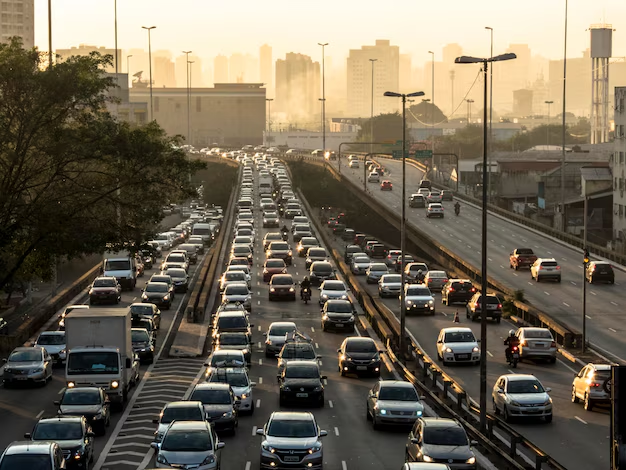
Is It Safe to Drive in Atlanta? What Locals and Visitors Should Know
Driving in Atlanta can feel intimidating, especially if you’re new to the city or coming from a smaller town. The metro area is large, traffic is heavy, and the highways are fast. Still, millions of people safely drive in Atlanta every day—you just need to understand how the city works and adjust your habits.
This guide breaks down what to expect, which areas and times are most challenging, and how to stay as safe as possible on Atlanta’s roads.
Overall: Is It Safe to Drive in Atlanta?
In general, yes, it can be safe to drive in Atlanta, but it requires:
- Comfort with busy interstates and high speeds
- Patience with congestion and sudden slowdowns
- Awareness of aggressive driving habits you may see from others
Atlanta’s driving environment is shaped by:
- Multiple intersecting interstates: I‑285, I‑75, I‑85, I‑20, GA‑400
- Heavy commuter traffic from the suburbs into the city
- Ongoing construction on major corridors
- Dense activity near Downtown, Midtown, Buckhead, and around Hartsfield–Jackson Atlanta International Airport
If you are an attentive driver, follow traffic laws, and plan ahead, you can drive safely here. The key is knowing what you’re getting into.
What Makes Driving in Atlanta Feel Risky?
1. High-Speed, Multi-Lane Interstates
The “Connector” (the overlapping stretch of I‑75/I‑85 through Downtown and Midtown) and the Perimeter (I‑285) are often busy and fast. You’ll see:
- 6–8 (or more) lanes of traffic in some sections
- Frequent lane changes as people try to reach exits
- Rapid shifts from 70 mph flow to sudden braking
For someone new, the volume of cars and constant merging can feel overwhelming.
Safety tip:
Stay in middle lanes when possible, signal early, and avoid last-second lane changes to reach your exit.
2. Heavy Rush-Hour Congestion
Atlanta is known for long rush hours, especially:
- Morning: roughly 6:30 a.m. – 9:30 a.m.
- Evening: roughly 3:30 p.m. – 7:00 p.m.
Problem spots often include:
- Downtown Connector (I‑75/I‑85)
- I‑285 on the north side (around Sandy Springs, Dunwoody, and Doraville)
- GA‑400 into and out of Buckhead and Sandy Springs
- I‑20 in both directions near Downtown
Stop-and-go traffic can lead to rear-end collisions and frustration.
Safety tip:
If you can, avoid peak hours your first few weeks in Atlanta and give yourself extra time to get used to traffic patterns.
3. Aggressive and Unpredictable Driving
Many Atlanta drivers are used to:
- Quick lane changes without much warning
- Driving above the posted speed limit on interstates
- Tailgating and weaving, especially on I‑285 and GA‑400
You don’t need to match this behavior. Safe driving means holding your lane, signaling early, and leaving space, even if others are driving more aggressively.
Safety tip:
If a driver is tailgating or weaving around you, let them pass rather than reacting or speeding up.
4. Complex Interchanges and Exits
Atlanta has several complicated interchanges, including:
- The I‑75/I‑85 “Connector” split north and south of Downtown
- I‑285 interchanges with I‑75, I‑85, I‑20, and GA‑400
- The Spaghetti Junction area (I‑285 and I‑85 northeast of the city)
Exits can come up quickly, and some on-ramps merge directly into fast traffic.
Safety tips:
- Use a GPS with lane guidance so you know which lane to be in well before your exit.
- If you miss an exit, keep going and reroute—do not cut across multiple lanes at the last second.
5. City Streets, Pedestrians, and Cyclists
In areas like Midtown, Downtown, Inman Park, West Midtown, and the BeltLine corridor:
- You’ll see more pedestrians, including people crossing outside of crosswalks.
- Scooters and bikes share the road or bike lanes.
- Street parking can cause sudden stops and doors opening into traffic.
Safety tips:
- Drive slower than you think you need to in dense neighborhoods.
- Always check for pedestrians and cyclists before turning or changing lanes.
- Expect congestion near events, festivals, and sports games (State Farm Arena, Mercedes-Benz Stadium, Truist Park).
Safer vs. More Challenging Situations in Atlanta
Here’s a quick overview of when and where driving tends to feel safer or more stressful:
| Situation / Location | Safer or More Challenging? | What to Expect / Tips |
|---|---|---|
| Midday (10 a.m. – 3 p.m. weekdays) | Generally safer | Lighter traffic; still pay attention to construction. |
| Late night on interstates | Mixed | Less congestion but higher speeds; watch for impaired drivers. |
| Rush hour on I‑75/I‑85 Connector | More challenging | Stop-and-go traffic, sudden merges; keep space cushions. |
| I‑285 (especially north side) | More challenging | High speeds, heavy trucks, frequent lane changes. |
| Residential neighborhoods | Generally safer | Lower speeds; watch for children, pets, and parked cars. |
| Around major sports/events | More challenging | Delays, detours, police directing traffic; be patient. |
Is Atlanta Safe to Drive for New Residents?
If you’re relocating to Atlanta, you may wonder whether you need a car and if you can handle driving here.
Getting Used to Atlanta Roads
Expect a learning curve in the first few weeks:
- GPS is your friend. Use it even on routes you’ll drive often.
- Practice on weekends or off-peak hours before jumping into rush-hour commutes.
- Start with short trips on familiar routes and gradually add more complex drives.
New residents from smaller towns often say that Atlanta’s speed and volume of traffic are the biggest adjustments—but they usually adapt within a few weeks.
Is It Safe to Drive as a Tourist or Visitor?
If you’re visiting Atlanta, you may be deciding between renting a car, using rideshare, or relying on MARTA.
When Driving Makes Sense
Driving is often manageable and convenient if you’re:
- Staying outside of Downtown/Midtown and want to explore suburbs like Marietta, Roswell, Decatur, or Stone Mountain
- Visiting attractions far from MARTA rail, such as Stone Mountain Park or Six Flags Over Georgia
- Comfortable with using GPS and navigating larger highways
Visitor Safety Tips
- 🕒 Avoid rush hour if you can plan around it.
- 🅿️ Check parking options ahead of time for places like Ponce City Market, Atlantic Station, and the BeltLine.
- 🚗 If driving from Hartsfield–Jackson Atlanta International Airport, be prepared: getting from the airport to Downtown usually involves I‑85 or I‑75, both busy but well-marked.
If you are not comfortable driving in heavy city traffic, rideshare, taxis, and MARTA may feel safer and less stressful.
Weather and Driving Safety in Atlanta
Atlanta doesn’t deal with harsh winter conditions as often as some cities, but weather can still affect safety.
Rain and Storms
Atlanta gets frequent heavy thunderstorms, especially in warmer months. During storms:
- Visibility drops quickly.
- Roads can pond or flood in low-lying areas.
- Oils on the road can make surfaces slippery at the start of rainfall.
Safety tips:
- Turn on headlights and wipers at the first sign of rain.
- Reduce speed and increase following distance.
- Avoid driving through standing water where you can’t see the depth.
Occasional Ice and Snow
Even a small amount of snow or ice can cause major issues in Atlanta because:
- Many drivers are not experienced with winter driving.
- Hills and overpasses can become especially slick.
- Road treatment may not be as extensive as in northern cities.
When ice or snow is in the forecast, many locals simply stay off the road unless absolutely necessary, which is often the safest choice.
Common Safety Concerns: Crime, Break-Ins, and Car Jacking
Most drivers in Atlanta never experience violent incidents while driving. However, like many large cities, there are some safety issues to be aware of.
Car Break-Ins
Car break-ins are more common in:
- Busy parking lots (shopping centers, nightlife areas, tourist spots)
- Dark or unattended lots late at night
Prevention tips:
- Do not leave valuables visible inside your car.
- Use well-lit, attended, or secured parking when possible.
- Lock your doors and roll up windows every time you park.
At Stoplights and Intersections
Some drivers worry about safety at long red lights, especially at night.
Simple precautions:
- Keep doors locked and windows mostly up.
- Leave space between your car and the one in front so you can maneuver if needed.
- If something feels unsafe, you can call 911 or drive toward a well-lit area or police station, using good judgment and obeying traffic laws where possible.
How to Make Driving in Atlanta Safer for Yourself
Regardless of where you live or visit in the city, you can significantly improve your safety with a few habits:
1. Use Technology Wisely
- Turn on voice-guided GPS so you can keep your eyes on the road.
- Check traffic conditions before leaving; allow extra time.
- Use “avoid highways” or “avoid tolls” options if you prefer surface streets, though this can add time.
2. Drive Defensively
- Assume other drivers may make sudden lane changes or stops.
- Keep a large following distance, especially at highway speeds.
- Avoid distracted driving—no texting, and input your destination before you start moving.
3. Choose Your Routes Strategically
- For shorter trips inside the city, consider arterial roads like Peachtree Street, Ponce de Leon Avenue, North Avenue, Memorial Drive, Moreland Avenue, instead of jumping onto the interstate for just one or two exits.
- If you’re nervous about the Connector, you can sometimes route around it using surface streets or the Perimeter (I‑285), depending on your destination and time of day.
4. Plan for Events and Game Days
Near Mercedes‑Benz Stadium, State Farm Arena, Georgia State University, Georgia Tech, and Truist Park, traffic can spike around events.
- Check whether major events are happening before you go.
- Consider parking a bit farther away and walking or using a shuttle.
- Expect road closures and follow police officers’ directions.
What to Do After a Crash or Traffic Incident in Atlanta
If you are involved in a traffic collision in Atlanta:
- Move to a safe location if possible, especially off busy highways like I‑75/I‑85 or I‑285.
- Call 911 to report any injuries or immediate hazards.
- For non-emergency reporting, you can contact:
- Atlanta Police Department (APD) non-emergency line: 404‑658‑6666
- Exchange contact and insurance information with the other driver.
- If needed, you can obtain crash reports through the Atlanta Police Department or, for highways, through the Georgia State Patrol.
For information about traffic laws, licensing, and registration, the Georgia Department of Driver Services (DDS) and Georgia Department of Transportation (GDOT) are primary resources:
Georgia Department of Driver Services (DDS)
Customer Service Center (Metro Atlanta):
2206 Eastview Parkway
Conyers, GA 30013
Phone (general information): 678‑413‑8400Georgia Department of Transportation (GDOT)
One Georgia Center
600 West Peachtree Street NW
Atlanta, GA 30308
General information line often available via the main state directory.
Always verify office hours before visiting, as they can change.
So, Is It Safe to Drive in Atlanta?
Driving in Atlanta is manageable and reasonably safe for most people who:
- Stay alert and avoid distractions
- Learn the major highways and interchanges
- Give themselves extra time, especially during rush hour
- Drive defensively rather than aggressively
If you’re new to the city or just visiting, start with off-peak driving, rely on good navigation tools, and don’t hesitate to use MARTA, taxis, or rideshare when you’d rather not deal with traffic. With realistic expectations and cautious habits, most drivers adapt and handle Atlanta’s roads safely.