
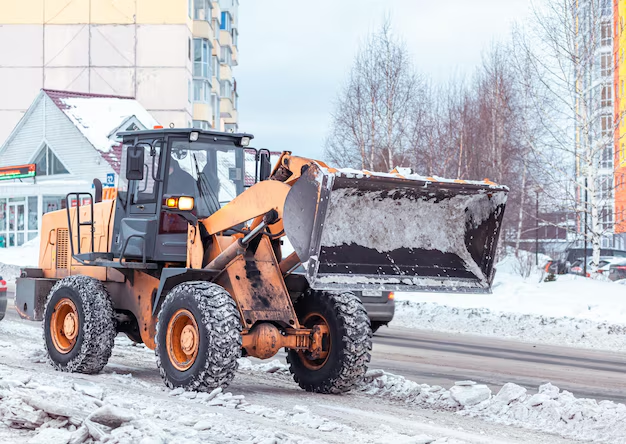
How Many Snow Plows Does Atlanta Have? A Local’s Guide to Winter Weather Prep
If you live in Atlanta, you already know: snow is rare, but when it hits, it can shut the city down fast. That naturally leads to the question: how many snow plows does Atlanta actually have, and what can they realistically handle?
Because Atlanta’s winter weather is so inconsistent, the city and surrounding counties use a mix of snow plows, salt spreaders, and brine trucks rather than maintaining a huge northern-style fleet that sits idle most years. The exact number of snow plows can change over time as equipment is bought, retired, or shared across agencies, but there are some clear patterns that help you understand what’s available and what to expect.
The Short Answer: Atlanta Has a Limited but Focused Snow Plow Fleet
Atlanta does not have hundreds of snow plows like cities in the Midwest or Northeast. Instead, it relies on a smaller, targeted fleet that focuses on:
- Interstates and major highways
- Key city arterials
- Critical routes to hospitals, emergency services, and public facilities
Across the metro area, winter operations involve equipment from:
- City of Atlanta Department of Transportation (ATLDOT)
- Fulton County and DeKalb County transportation/public works departments
- Georgia Department of Transportation (GDOT) for interstates and state routes
Most of these agencies use dual‑purpose trucks that can be fitted with plows and spreaders when needed, rather than dedicated snow plows that only work in winter.
Because official fleet counts can change, what matters most is how the limited plows are used and what that means for neighborhoods, commutes, and travel plans.
Who Runs Snow Plows in Atlanta?
Several levels of government share responsibility for snow and ice response in and around Atlanta.
City of Atlanta (Inside City Limits)
Within the city itself, ATLDOT and the Department of Public Works handle:
- City‑maintained streets, bridges, and connectors
- Priority routes around Downtown, Midtown, Buckhead, and major neighborhoods
- Access to hospitals, fire stations, police stations, and major city facilities
They operate a mix of:
- Trucks with front‑mounted plow blades
- Salt and gravel spreaders
- Brine (liquid de‑icing) applicators
The number of active plows can be limited, so they’re assigned based on a priority route plan rather than trying to reach every residential street.
Key City Offices (for general info or non‑emergency questions):
- City of Atlanta Department of Transportation (ATLDOT) – typically reached via City Hall or the city’s customer service lines
- City Hall: 55 Trinity Ave SW, Atlanta, GA 30303
- General City Services: 3‑1‑1 (from inside city limits) or the non‑emergency main line listed on city materials
For emergencies, always call 9‑1‑1, not public works.
Georgia Department of Transportation (GDOT)
GDOT is responsible for:
- Interstates through Atlanta: I‑75, I‑85, I‑285, I‑20, and key state routes
- Major commuter corridors in and out of the city
GDOT maintains its own winter operations equipment, including:
- Snow plows adapted to multi‑lane highways
- Large salt and brine spreaders
- Crews that work in shifts during winter storms
Their focus is to keep major regional traffic flowing. This is why you might see interstates cleared while neighborhood streets remain icy.
Fulton, DeKalb, and Other Metro Counties
Outside the city of Atlanta, counties like Fulton, DeKalb, Cobb, Gwinnett, and Clayton maintain:
- County roads and bridges
- Some arterial streets that feed into the city or connect suburbs
They typically have a smaller number of plow‑capable trucks, with priority given to:
- Steep or problem‑prone hills
- Bridges and overpasses
- High‑traffic county roads
If you live in the metro area but outside city limits, your winter road response may be handled more by your county than by the City of Atlanta itself.
What “Limited Fleet” Really Means for Atlanta Residents
Instead of asking for an exact fleet count (which can change year to year), it’s more helpful to understand how Atlanta triages roads during snow or ice.
Here’s a simple snapshot of how snow plows and related equipment are typically used:
| Area / Road Type | Who Handles It | Typical Priority Level | What You Can Expect ❄ |
|---|---|---|---|
| Interstates (I‑75, I‑85, I‑20, I‑285) | GDOT | Very High | Treated and plowed early and often |
| State Routes & Major Highways | GDOT / Counties | High | Usually treated before smaller roads |
| Major City Arterials (Peachtree, Ponce, etc.) | City of Atlanta / Counties | High | Focus on keeping main travel corridors open |
| Bridges & Overpasses | All agencies | High | Often brined and salted first due to icing risk |
| Residential Neighborhood Streets | City / Counties | Low | May not be plowed at all in minor storms |
| Steep Hills & Problem Areas | City / Counties | Medium to High | Selective treatment depending on severity |
Because the number of plows and crews is limited, not every street is treated, especially in short or light events.
Why Atlanta Doesn’t Have More Snow Plows
People often wonder why a large metro area like Atlanta doesn’t simply buy more plows. Several factors shape that decision:
1. Rare, Variable Winter Weather
Atlanta’s winters are generally mild, with:
- Only occasional snowfall or ice events
- Some years seeing no measurable snow at all
- Bigger storms happening infrequently
Maintaining a huge, specialized snow plow fleet that might sit idle for years would be extremely expensive and hard to justify compared to daily needs like road repairs and transit.
2. Multi‑Use Equipment
Instead of classic “snow only” plows, Atlanta often uses:
- Dump trucks and other heavy vehicles outfitted with removable plow blades
- Spreaders and brine tanks that can be installed or removed seasonally
This keeps the fleet more flexible and cost‑effective, but it also means the city is not equipped like a city that expects snow all winter long.
3. Focus on the Most Critical Routes
With a limited number of plows, the strategy is to:
- Keep the transportation backbone moving (interstates and major roads)
- Maintain access to emergency services and critical infrastructure
- Accept that some residential streets may remain snow‑ or ice‑covered during short events
How This Affects You During a Winter Storm in Atlanta
Understanding how many snow plows Atlanta has is really about knowing what to expect and how to plan.
Expect Main Roads to Improve Before Side Streets
In a typical winter weather event:
- Interstates and major routes like Peachtree Street, Northside Drive, Memorial Drive, and Ponce de Leon Avenue are treated and cleared first.
- Smaller neighborhood streets in areas like Grant Park, West End, Kirkwood, or Westview may remain slippery longer.
- If your home is on a steep hill or a secondary road, clearance may be delayed or not occur at all in minor storms.
📝 Tip: If snow or ice is forecast, park your vehicle in a spot where you can access a main road more easily, or be prepared to stay put.
Timing Matters
Because the fleet is limited, the timing and intensity of a storm can dramatically affect conditions:
- Overnight storms can lead to very slick morning commutes before crews catch up.
- Rapid refreezing after sunset can undo daytime melting, especially on untreated side roads.
- Longer, more serious storms may prompt round‑the‑clock operations, but not instant coverage everywhere.
School and Business Closures
Since the city doesn’t have a massive plow fleet, local agencies often take a cautious approach with:
- School closures or early dismissals
- Delayed openings for government offices
- Encouraging or requiring remote work when possible
This is partly due to the reality that many residential and collector roads just won’t be cleared quickly.
How to Check on Road Conditions and Response in Atlanta
While you likely won’t get a live “how many plows are running right now” number, you can get a good sense of current conditions and priorities through official channels.
City of Atlanta
For streets under city control, residents often look to:
- City of Atlanta 311 – for non‑emergency questions or service requests
- ATLDOT / City of Atlanta winter weather updates – often shared through city phone lines or public announcements
Typical city offices associated with transportation and operations include:
- City Hall: 55 Trinity Ave SW, Atlanta, GA 30303
- City information lines and 3‑1‑1 (from within Atlanta city limits)
Georgia Department of Transportation (For Interstates & State Routes)
GDOT typically provides information on:
- Interstate closures and lane blockages
- Ongoing treatment operations
- Wrecks or major incidents on I‑75, I‑85, I‑20, I‑285, and other state routes
You’ll often see this referenced on overhead message boards along the interstates and through regional traveler info services.
County Governments (If You’re Just Outside City Limits)
If you’re in a place like unincorporated Fulton County, DeKalb County, Cobb County, or Gwinnett County, your best information usually comes from your:
- County transportation or public works department
- County emergency management office
They can sometimes explain how county roads are being prioritized and may share road condition updates via public phone lines or regional alerts.
Practical Tips for Dealing With Limited Plows in Atlanta
Given that Atlanta’s snow plow fleet is modest and heavily prioritized, residents and visitors can prepare in simple, practical ways:
- Avoid unnecessary driving during active snow or ice, especially on hills, bridges, and shaded back roads.
- If you must travel, stick to major roads and interstates that are more likely to be treated and plowed.
- Keep basic supplies in your car during winter months:
- Blanket or warm clothing
- Phone charger
- Small amount of water and snacks
- Ice scraper and windshield brush
- Before a forecasted winter event, top off your gas tank and consider picking up groceries early.
- If you rely on public transit, check for service adjustments; icy roads can also impact buses, not just cars.
Key Takeaways for Atlanta
- Atlanta has a relatively small number of snow plows compared to colder cities, using multi‑purpose trucks rather than a massive dedicated fleet.
- GDOT, the City of Atlanta, and surrounding counties work together, each focusing on their own roads.
- Interstates and major roads are top priority; many residential streets may remain untreated or cleared later, especially in minor or short‑lived storms.
- Instead of counting plows, it’s more useful to know which roads are likely to be cleared first and plan your travel and expectations around that.
Understanding how Atlanta’s limited snow plows are deployed helps you make safer, more informed decisions whenever winter weather shows up in the city.